Thursday, August 30, 2007

Requiem for a mall

About 15 years ago, when I was living in Des Moines the first time around, I had a girlfriend who was assistant manager of "Everything .99" at Southridge Mall -- one of those stores where everything costs a dollar. The store had originally been "Everything 1.29," but it knocked 30 cents off to keep the traffic coming in. This week, I returned to Southridge for the first time in probably a dozen years. "Everything .99" was gone; in its place was "Filipino Store," a merchant that, obviously, caters to Des Moines' burgeoning(?) Filipino population.

The evolution of that one storefront sums up perfectly the continued deterioration of Southridge: from downscale retail, to cut-rate downscale retail, to micro-niche retail.

But at least Filipino Store had customers. I counted three people in there (Filipinos, of course), buying groceries and other specialty items not available at Aldi or Fareway. That was three more people than were shopping at "Natural Therapeutics," a jacuzzi dealer whose lone visible employee was keeping shoppers away with some kind of political-rant radio show turned up to full blast, and two more than were browsing the secondhand material at Book Trader, whose lone visible employee was unshaven and disconcertingly bleary-eyed.

Those three storefronts were occupied, though, and at Southridge that's saying something. A visit to the Soutridge Mall website reveals that of 91 specialty retail locations within the mall, 38 are listed as "leasing opportunities," meaning they're vacant. (This count does not include kiosks. When a kiosk is vacant, the mall management just takes it down. So whenever you see a hastily arranged "sitting area" in the center of a mall concourse, it's a good bet there was once a Piercing Pagoda or Sun Tropik on that spot.) Several empty Southridge storefronts are being consolidated into a single large location for discount clothier Steve & Barry's, but even when that project is completed, one-third of the specialty stores will still be vacant.

On the north side of town, at Merle Hay Mall, things are better, but just a bit. On a recent walkthrough, one could see 21 vacant specialty store locations out of a total of about 85, a vacancy rate closer to 20%-25%, compared with 40% at Southridge. While Southridge's vacancies are spread pretty evenly throughout the mall, certain areas of Merle Hay have been hit especially hard. The north end, near Sears, is a particularly stark dead zone. If you ever wondered what a paradigm shift looks like, you can see it here: Empty storefronts still bearing Sam Goody and Suncoast Motion Picture Company signage face each other across a deserted corridor. (In the Internet age, stores like these that sell commodity products are doomed. At a bookstore, at least you can pick up the volumes and page through them. Music and movie stores offer you nothing you can't get online, and in fact much less.)

Southridge is deep into the shopping mall death spiral, while Merle Hay is just starting to slip into the funnel. They show the classic symptoms:

  • Bejeweled islands. In just about any mall, thriving or dying, you'll find jewelry stores wherever corridors intersect. One major reason is that jewelry is the ultimate impulse buy: People want it, but no one needs it, so the stores are positioned to poach people coming to the mall for other purposes. Also, of the people who do go to the mall intending to buy jewelry, few have a particular store in mind. The stores are pretty much interchangeable. To all but the most discriminating buyers, one 50-point diamond or lump of white gold is as good as the next. Thus, location becomes critical, and stores "on the corner" are best poised to grab those customers prepared to stop at the first place they see. When malls are going through their death throes, jewelry stores hold out longer than most. Perhaps their margins are higher -- one really good sale can carry the entire store for a day. Or perhaps years of exposure to all those corner jewelry stores have fixed in people's minds the idea that malls are full of indistinguishable jewelry stores, so that when people are in a mind to buy, they'll go to a mall they might not otherwise frequent. Whatever the reason, when you walk through a dying mall, it will seem like every other store is selling jewelry. That's because during your walk you see one empty storefront after another (and another and another), then you get to an intersection, and there's a jewelry store on every corner. You can see this in action in a stretch of stores in the northwest corner of Southridge. At one corner, there's a Helzberg Diamonds with three vacant stores on one side and two on the other. Directly across the corridor is a Zales with two empty stores on one side, and two out of three stores empty on the other.

  • Cellphone clutter. I don't know why this happens, but it does. Dying malls fill up with stores trying to sell you cellphone service. My only guess is that leasing agents are desperate to get some tenant, any tenant, to fill empty storefronts, and that cellphone sellers have very little overhead. Southridge has separate stores for Nextel, T-Mobile and U.S. Cellular; a Shock City Cellular location that offers Verizon, Sprint and T-Mobile; a Radio Shack that handles AT&T; plus a kiosk that sells phone holsters and other cell-crap. Merle Hay has Verizon, U.S. Cellular, Sprint, Qwest, Shock City, Radio Shack, Cingular/AT&T and an accessories kiosk. Within five years, both of these malls will have microeconomies based exclusively on people selling each other tennis bracelets and two-year unlimited text-messaging contracts.

  • No goods, just services. The business model for American malls in the late 20th century was to offer people a wide range of shopping to get them in the door, and then provide services to keep them there. If a person could get their hair cut at the mall, or get something to eat, they'd be more likely to stay longer and arrange to do all their shopping there. A dying mall sees this dynamic reversed. Stores close, and all that's left is the services. People now come to the mall specifically to get their hair cut. That's fine for the salon, but it does nothing for the mall, it creates no "through" traffic. Each of the two malls has at least three hair or nail salons, for example.

  • Non-retail "store"-fronts. Faced with 40% vacancy rates, a mall will do just about anything for rental revenue. Southridge is now home to two churches, the Iowa Mortgage Association, a temp agency and the Des Moines Jaycees' annual haunted house, a large space that is unused for 11 months of the year.

What's killing the Des Moines malls? The West Des Moines malls, of course. More specifically, Jordan Creek Town Center.

When I first lived here, there were three malls, each with a distinct identity. For lack of better terms, let's just say that Valley West Mall, on what used to be called 35th Street, was the highbrow mall, Merle Hay was the middlebrow mall, and Southridge was the lowbrow mall. The malls' identity reflected their surroundings. Valley West was in the monied western suburbs, Southridge was on the working-class south side, and Merle Hay was on the border of Des Moines and Urbandale. (Snubbed as usual, east-siders have a mall called "Ankeny.") Then, while I was out, Jordan Creek came along to meet a need no one knew existed. Built in the Dallas County portion of West Des Moines (guess which county gets the sales tax revenue), it was to feature high-end retail and restaurants, assuming you consider Dillard's and P.F. Chang's "high end."

With Jordan Creek going up in the western suburbs, which mall stood to lose the most? Here's a map of the Des Moines area, with the pre-existing malls spotted in red and Jordan Creek in blue:


The average person would probably say Valley West. It's the closest of the three, and it targets the same upscale clientele as Jordan Creek. The correct answer, however, is Southridge.

Southridge is what's known in the industry as a "super-regional" mall -- or, it was, before its customer base collapsed. It was designed to be the primary shopping venue for a large area, starting with the south side of Des Moines and extending to Norwalk, Carlisle and Indianola. Indeed, a stroll through Southridge in the early 1990s found it teeming with letter jackets from the high schools in those southern-tier communities. Warren County license plates filled the parking lots. As the southern suburbs became more affluent, the mall underwent a dramatic expansion and renovation, the centerpiece of which was a delightful indoor carousel. Southridge, which had been sliding, was poised for a comeback.

Around this time, Des Moines business leaders, airport boosters and others were again pressing for construction of a southern freeway that would connect Interstate 35 on the west with U.S. 69 on the east, giving Des Moines a true beltway. They would eventually get their wish with the relocated and expanded Iowa Highway 5, a truly beautiful stretch of highway that leads ... pretty much straight to Jordan Creek Town Center. Families that used to come up from the south to shop at Southridge Mall could now hop on this brand-new freeway and in just a few extra minutes be stuffing their faces at the Cheesecake Factory at Jordan Creek. The death of Southridge Mall had begun.

When I was there this week, there was only one child on the carousel.

Merle Hay also took a beating, though not quite as severe. It still has an Old Navy store, a Limited, an Aeropostale, an American Eagle, and an updated Victoria's Secret. (The old Victoria's Secret stores were designed to look like Parisian salons; the updated ones are designed to look like Amsterdam whorehouses.) But there are far fewer people moving through. Merle Hay's proximity to Interstate 35-80 had long brought in shoppers from the north and northwest. Now that same freeway sweeps many of those same shoppers down to Jordan Creek.

What of Valley West? Its website shows just three vacancies out of more than 100 specialty locations, plus two storefronts that are being filled temporarily while Victoria's Secret and The Limited renovate their stores. Closer to Jordan Creek than either of the two other malls, and yet its vacancy rate is under 5%. How can that be? Some theories:

  • The "my mall" effect. For tens of thousands of people in West Des Moines, Valley West is simply "my mall." It's close by and has all the stores they need. If they really have to, they'll go to Jordan Creek -- say, to get an iPod at the Apple store -- but for day-to-day shopping, there's no need to go any further. Merle Hay may benefit from a similar effect, though its immediate and satellite neighborhoods are neither as affluent nor as populous. Southridge, meanwhile, is surrounded almost entirely by commercial property.
  • The I-235 advantage. The city of Des Moines is still the population center of the metro area. And for most people in the city, you would get to Jordan Creek by taking Interstate 235, which goes ... right past Valley West Mall. It's a significantly shorter trip to Valley West, and the payoff for going all the way to Jordan Creek is not much greater.
  • The Southdale strategy. Southdale, in Edina, Minnesota, was "my mall" when I was growing up in Minneapolis. The first fully enclosed shopping center, it was a roaring success from the 1950s until the '90s, when the gigantic Mall of America opened a relatively short drive away down Interstate 494. Despite suffering a sharp initial drop in traffic, Southdale embarked on an extensive renovation plan and an aggressive advertising campaign. The strategy was this: "We can't keep shoppers from going and checking out the megamall. So let them go. When they get fed up with the traffic, the parking hassles, the tourists and the sheer damn size of the place, they'll come back to Southdale." And they did. Twin Cities residents will go to the Mall of America, if they have to, but they don't shop there. Who has the time? Valley West can make this same appeal: Why go all the way out to Jordan Creek, and deal with all the out-of-towners with their Mahaska County license plates and creative turn-signal usage, and park a mile away, and wait at one stoplight after another, when all you need is right here? Valley West has undergone a renovation aimed at looking even more upscale than Jordan Creek. I suspect it will work.

The Des Moines area didn't need another mall, but it got one anyway. Southridge is dying, and Merle Hay isn't looking so hot, either. Who knows? In a few years, maybe we'll need Jordan Creek after all.

Tuesday, August 28, 2007

We have met the stalker, and it is us

One of the top stories on Channel 13's noon news today was that police were following up on a report of a strange man who was seen taking pictures of women in the the downtown skywalks. Downtown businesses are so alarmed by this that they are alerting their employees to Mace the living shit out of anyone who even looks like he might have -- or own -- a camera.

The piece included comments from the police department's PIO, Sgt. Todd Dykstra, who said that they want to know what the guy was up to and that it's conceivable he could be charged with harassment. I have no doubt that Dykstra knows damn well that there's almost no way to make such a charge stick if all the guy was doing was takin' pitchers o' purty gurls in the skywalks. (The Supreme Court has made it abundantly clear that you have no presumption of privacy in a public place. That's why the authorities, and quasi-authorities like Wal-Mart security, are allowed to keep you under surveillance pretty much from the time you step out your front door.) But I understand why Dykstra said what he did: He'd just as soon not have the skywalks filled with weirdos taking pictures of random women. (The Supreme Court also says it's OK for the police to fudge the truth when their heart is in the right place.)

Which brings us back to the reason Channel 13's report this afternoon was unintentionally hilarious. Someone was stalking the skywalks with a camera, shooting pictures of random women. What did Channel 13 do for visuals for this story? It had someone stalk the skywalks with a camera, shooting footage of random women. If I was Todd Dykstra, I'd have Tased that sumbich.

Back at the studio, fifth-string Channel 13 anchorman Patrick Dix was utterly oblivious to the irony. John Bachman would have been all over that shit.

Monday, August 27, 2007

Third Reich funnies

Let's hope there weren't any Holocaust survivors reading the Register's business section today. Because here's the main art from the front page:


Yes, that's what you think it is. A cartoon Nazi. (I think it may actually be "Ilsa: She-Wolf of the SS.") It accompanied the latest installment of "Workbytes," the semiweekly column devoted to helping young people navigate the world of work. Today's topic was bad bosses. A sidebar included some workplace horror stories, including a truly hair-raising account by a waitress whose supervisor knowingly hired a man who had been stalking her. But none of the bad-boss tales was as shocking as the bathos with which this one was delivered:
"The boss runs the place like a concentration camp. It seems as if we are treated like second-class citizens, since we are on the lower end of the pay scale. For example, every department is entitled to a department outing. Not us. Our department hasn't had an outing for years. We also are to have all our time accounted for, even bathroom breaks. If you are scheduled to be in at 8 a.m. and get here at 8 a.m., you are late. You are supposed to be ready to work by 8, not here by 8. If you come in at 8:01, then you have to stay late a minute to make up your time."

Why, it's just like a concentration camp! At Hitler's concentration camps -- or Stalin's, or Mao's, or Pol Pot's -- people were just burned alive, or worked to death, or made to kill their own parents, or ordered to dig their own graves, or stripped of all their dignity and forced to endure hell on earth. But this guy's department didn't even get an outing. And everybody else's did! And if he comes in a minute late in the morning, he has to stay a minute late in the afternoon! He can't go home until 5:01 p.m.! No wonder the Jews were so traumatized at Auschwitz!

Look, I know hyperbole. I understand that this guy's boss was being unfair and unreasonable. I understand that someone, somewhere thinks it's funny to depict asshole bosses as "Nazis." But there's something deeply troubling about the combination of this pathetic story and the illustration.

I frequent a number of message boards for language professionals. Last year a young woman joined one of the boards with the username "Copy Nazi." When asked to explain herself, she said that she has very high standards, is very exacting, and demands strict adherence to rules. And I thought: Oh, that's what defined the Nazis? That they were just such sticklers? A bunch of anal-retentive obsessives hung up on rules? Good God. No, what defined the Nazis was the institutionalization of inhumanity. Strict adherence to petty rules was not their problem. To suggest as much just betrays ignorance. And also a lack of creativity: "Nazi" = "meticulous"? Yeah, haw haw haw, you dumbass.

There's a larger lesson here about comedy. When Jerry Seinfeld named a character the "Soup Nazi," he was deliberately going all the way over the top. The name was meant to reflect poorly not on the soup seller, but rather on Seinfeld himself, for so grossly overreacting to the man's strange behavior. Suppose the character had actually turned out to be a Nazi -- death's-head cap, Jodhpurs and all. It wouldn't have been funny; it would have been in terrible taste. It's only because the man wasn't a Nazi and wasn't depicted as one that calling him one made any comedic sense.

When the person quoted by "Workbytes" says his workplace was "like a concentration camp," it's clear he does so without any self-awareness. He just said something ridiculous, but he doesn't realize it. Because in his solipsistic little world, any workplace's adherence to silly rules is on par with the atrocities of Dachau. Probably because he has no idea what happened at Dachau. But you know? I think I could let that slide, too, if it weren't for the fucking cartoon. The combination of historical and rhetorical cluelessness makes the whole thing offensive.

(And yes, I know she's supposed to look like Col. Klink, but Hogan's Heroes went off the air 40 years ago. It's ancient history, and it's no defense.)

Sunday, August 19, 2007

Valley wins. Big surprise.

Perhaps you saw the story about Iowa high school athletics on the front of the Sports section in Friday's Des Moines Register. Here are the first couple sentences, edited for, um, clarity:

"West Des Moines Valley isn't the only team eligible for the 'Iowa's Largest and Wealthiest High School Award,' though it may seem like it. This marks the fifth consecutive year the Tigers have won, and no school has won more since the creation of the competition in 2000."

OK, technically, the honor is called the "All-Sports Award." As the story says, it has been given out every year since 2000 by the Register. The winning schools, the newspaper says, are determined "based on the performance of athletic teams in all sports." But when you stop and think about it, you realize that the award might as well be based on the demographics of the student body, because those demographics have helped hand the award to Valley every year since 2003.

Before we start, let me make clear that the case we will be building here is not against Valley High School. Valley athletics have an indisputable tradition of excellence. To piss on the school for winning championships is to suggest that the Valley kids should be taking a dive out there. They shouldn't. They're good kids. My wife is a Valley alumna, for pete's sake. No, the case we're building is against the Register's All-Sports Award itself.

First of all, let's talk about size. Valley has by far the largest enrollment of any Iowa high school, with about 1,950 students. That's about 15% larger (about 230 more students) than the next-closest competitor, Des Moines East. Does size matter? You bet it does. Because a huge student population allows a school's teams to draw from a significantly deeper talent pool.

Let's assume that athletic talent is fairly evenly distributed through the population (it isn't, obviously, but we're starting from the most basic concepts). For every 500 students, let's say there is maybe one player in a given sport who is a "10" on a ten-point scale. At progressively lower talent levels, there are more and more students. Out of 500 kids, there are, say, two 9s, three 8s, five 7s, eight 6s, twelve 5s, and so on. In putting together a 20-player team, then, Valley has access to four 10s, eight 9s, and enough 8s to fill out the roster. Valley's team average is 8.4, and the median player, the one in the middle of the team, talent-wise, is a 9.

Nearby Urbandale High School, meanwhile, is similar in a lot of respects to Valley but has fewer than half as many students. So it must make do with maybe one or two 10s, three 9s, five 8s, eight 7s and some 6s. Urbandale's team average is just a little lower at 8.2 -- but the median player is only a 7, two full levels below Valley's. Anyone who knows sports acutely would tell you that the median is more important that the average, which is distorted by extremes. You don't win championships with your stars. You win them with your role players.

So Valley's size alone gives it an advantage toward winning the Register award every single year. But demographics is more than just raw population numbers. The reason Valley is so large is that it's the only conventional public high school in the West Des Moines district, which covers more than 60,000 people in West Des Moines, Clive and portions of Urbandale and Windsor Heights. That territory also constitutes the greatest concentration of wealth in the state. Does money matter? You bet it does. Because an affluent student population also allows a school's teams to draw from a significantly deeper talent pool.

Simply put, rich kids (and upper-middle-class kids) have a leg up on poor kids (and working-class kids). In a richer school, students in the aggregate will have more free time to pursue sports of all kinds, far more opportunity to pursue niche sports such as tennis and golf, and more parks and recreational places in which to pursue them. In a poorer school, more students will have jobs (to help support the family, not just to get spending money), more will be unable to afford specialized sporting equipment, and more will be watching siblings before and after school. In those poorer schools, a certain portion of the student body couldn't play sports even if they wanted to, and many are limited in the sports they can participate in.

That's not to say poorer schools can't and don't field teams that compete at a high level. They do. The catch is: They can't do it in every sport. In any given school, rich or poor, the best basketball players will be playing basketball, the best football players will be playing football, because opportunities are present in those sports from a young age. It's the lesser sports -- the ones that colleges refer to as "non-revenue" sports -- where the competition between rich and poor schools breaks down completely. Thousands of kids in the western suburbs grow up exposed to golf, tennis, soccer, swimming, diving, volleyball. On Des Moines' east side ... not so much. Des Moines East can field a decent basketball team and a track team, of course, but how's their golf team? Their tennis team? Their swimming team?

This is key, you see, because the All-Sports Award depends on participation in "all sports." Friday's Register article includes a little sidebar about how Valley won the All-Sports title. In the past year's state tournaments, Valley teams were:

  • First in girls' swimming
  • First in girls' softball
  • First in girls' soccer
  • Second in boys' track
  • Third in boys' tennis
  • Third in boys' soccer
  • Fourth in boys' swimming
  • Fourth in girls' golf
  • Fifth in boys' golf
  • Seventh in girls' track
  • Semifinalists (third/fourth) in football
  • Semifinalists (third/fourth) in girls' basketball
It's a great record, and all the student-athletes at Valley have every right to be proud of their achievements. Again, nowhere in this post am I alleging that Valley athletes have any unfair or improper advantage on the field of play. However, the Register All-Sports Award rests on essentially unfair and improper criteria. You look at Valley's accomplishments, and you see that what won it the award were its golf teams, its swimming teams, its soccer teams, its tennis teams. When you have 2,000 students, you can have a competitive swim team and a competitive golf team and a competitive tennis team and a competitive soccer team. Other schools -- far smaller schools -- can't have them all. The pool just isn't deep enough.

(The Register award, it should be noted, is given out for three categories of schools: "small," those with 1-349 students; "medium," or 350-799 students; and "large," 800 or more. At the lower levels, no school has dominated year after year like Valley has. But those categories have an upper bound, and no school in them has a combined enrollment/affluence edge as stark as Valley's.)

If the award itself is so skewed, why does the Register even give it out? To understand that, it helps to understand a couple things about the media.

First, when people who don't work in the news media see something irrelevant, trivial or otherwise questionable dressed up as "news," they shake their head and ask, "Slow news day?" The answer is usually: Yes. For sports news, you don't get much deader than August. All that's going on is baseball. If it weren't for Shawn Johnson of West Des Moines(!) slaughtering the opposition in international gymnastics, the Register wouldn't have anything to write about at all. (Besides another preview on the Hawkeyes' backup punter, of course.) So they fill column inches with a bogus award.

Second, you may or may not have noticed this, but community newspaper sports sections aren't exactly fonts of creativity. That's why every other sports headline is a brainless pun on someone's name: "Sabbatini has Tiger by the tail." Get it? Cuz his name is Tiger, and tigers have tails! I'll bet you dollars to doughnuts that someone in the Register hierarchy saw that some other newspaper somewhere was giving out an annual high-school all-sports award and thought, "Hey, why don't we do that?" But they never stopped to think through the criteria. In California, or New York, or Illinois, or even Missouri, you have a lot of large schools from different population centers that can be measured against each other on a roughly equal basis. Iowa does not. Rating high schools according to the Register criteria is always going to be comparing apples to oranges to plums to cherries to grapes, because there are so few teams with apples.

Valley athletes deserve congratulations for a lot of things, but not this.

Friday, August 17, 2007

Hunka hunka noisome overkill

Are you sick yet of the coverage of the 30th anniversary of Elvis' death? Tired of the hagiography of a drug-addicted sexual deviant who died on the toilet? Sorry, but there's nothing I can do for you. We'll be getting this same fucking useless, lazy, media-manufactured "story" every August until the last baby boomer is cold in the ground.

Wednesday, August 15, 2007

WHO's majestic porch

"Van and Bonnie," longtime radio personalities for the local right-wing station, WHO, can be seen in a new television advertisement for Midwest Construction, a local contractor. Midwest has updated the famous(?) "WHO Crystal Studio" at the Iowa State Fairgrounds. Fairgoers are invited to stop by and check out the new surroundings.

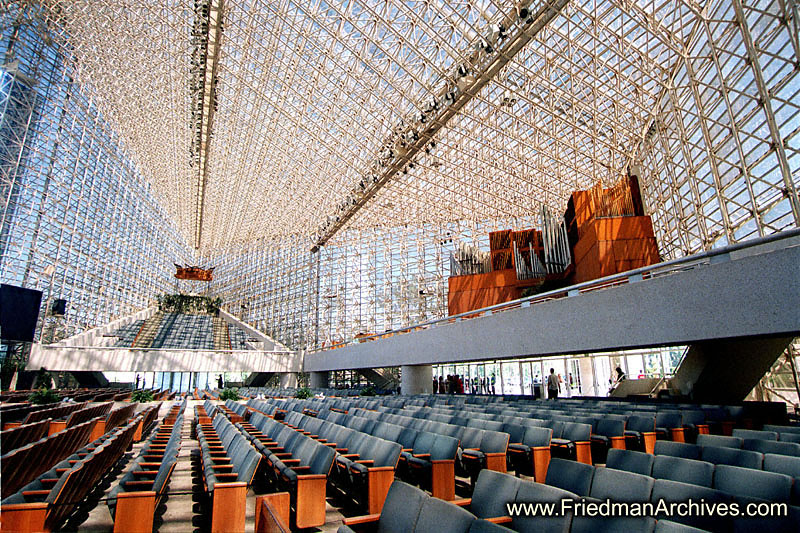
The Crystal Studio. Sounds so chic, so futuristic, doesn't it? The name evokes images of sleek modernism, like the Crystal Cathedral in California, or maybe the Crystal Court in Minneapolis, or even the high rises of Crystal City, Virginia, looking out over Washington, D.C. Really, the Fortress of Solitude is what comes to mind.

Or, maybe it just makes you think of a fucking porch:


There's nothing wrong with the building, per se. If I want to add a nice three-season room, I'll definitely consider hiring Midwest Construction for the job. It's the name that's a pretentious joke. Call it the "Panoramic Studio" if you must give it a name. Or the "Fishbowl studio." Or hey, even "The Porch." Imagine how folksy and inviting that would sound in an ad: "Come out and join us on The Porch at the Iowa State Fair."

But instead, it's the Crystal Studio. As the late Merv Griffin would say, "Oooooooooohhh. That's goooood."

Sunday, August 12, 2007

And no shiitake mushrooms!

We've begun to go through a lot of baby food at our house. The boy who for so long considered solid food beneath him -- and as a result wound up with solid food all over him, and all over us -- is now going through a good 10 ounces of the stuff every day. A lot of it he likes: squash, sweet potatoes, carrots, pears, applesauce, green beans. Some of it he doesn't care for: bananas, peas, anything with meat in it.

One particular concoction has been met with considerable ambivalence: Vanilla Custard Pudding. He'll take a few bites, but he doesn't seem excited about it. It's sweet, so you'd think he would like it, but there's something funny about the consistency. Or maybe it's the label.

See, Gerber baby food now comes in little clear plastic containers rather than the jars of yore. The particular variety of food is printed on an inner lid that you peel off and throw away -- sort of like on a can of Pringles. Because that lid gets tossed, Gerber also prints the variety on the side of the container, so you know what it is if you put the leftovers in the fridge. There is limited space on the side, though, so sometimes they have to abbreviate. "Apples, Strawberries and Bananas," for example, becomes "APPLES STRAW BANANA."

So maybe when we're feeding him Vanilla Custard Pudding, the boy looks at the spoonful of sticky, whitish goo and then looks at the label ...


... and thinks to himself: Ah, no, I'll pass, thanks.